Showing posts with label Death Valley. Show all posts

Wednesday, May 6, 2015

Rebecca Jackrel

Early in 2007 I attended my first NANPA conference, in Palm Springs. It was an exciting time; I had just quit my day job to be a full-time photographer. I was also a little apprehensive, because I didn’t expect to know anyone there, and I’m not the most outgoing person in the world.

There were no formal events the first night of the conference, so after checking in I went to the members’ photo exhibit. There was one photo in particular, of an Alaskan moose, that I kept coming back to. I don’t remember most of the details – just that its eyes were very compelling and I needed to stop and look at it for a few minutes. I noticed a woman standing next to me, apparently also entranced by the photo, so I said something to her about it. She told me it was hers, and she had been loitering nearby so she could hear what others had to say about it. Her name was Rebecca Jackrel.


Rebecca Jackrel, photographed by Jim Goldstein

Later that evening, Rebecca and I were part of a small group that shared a few beers in the hotel bar, followed by dinner at a nearby restaurant and much conversation about nature photography. We talked again several times over the next few days, and by the end of the conference I thought of her as a friend.

Since that weekend our paths have crossed many times, though we’ve rarely seen each other in person. Her name seems to come up whenever two or more Bay Area nature photographers get together, whether at a gallery opening, a Bay Nature party, or, as happened last year, at a pileated woodpecker’s nest. She came to the opening for an exhibit of my photos in Berkeley, and when I published my book on Death Valley she wrote a review. When her gorgeous book on the Ethiopian wolf was in the planning stages, she asked me for advice on choosing a printer and other production services. Mostly, though, we stayed in touch on Facebook, where we admired each other’s photos and followed each other’s photographic adventures in Death Valley, Iceland, Ecuador, and other beautiful places.


It was also on Facebook that I learned of her struggle with cancer and, along with her many friends, worried about the bad news and cheered the good. When she reported, in 2013, that she had completed her chemo and was once again getting out to photograph birds, I felt a tremendous sense of relief.

But the news was not always good. There was progress and there were setbacks, and Rebecca posted about both, always with a strength, optimism, and grace that were an inspiration to her friends in both good times and bad.

On March 12, Rebecca posted an update that began, “Well my lovelies, they say all good things must come to an end. I know we all wish we could ride that roller coaster just one more time …” She went on to say that the drugs were not working, her body was used up, and she had simply run out of options. She planned to continue treatment for another month so she could visit Death Valley in the spring once more.

Rebecca never made it back to Death Valley. Her condition continued to worsen, and she passed away earlier this week. She was 43.

Rebecca was a remarkable person, a good friend to many, a passionate and tireless advocate for wildlife, and of course a great photographer. She made the world a better place for her friends and, through her work, for countless others as well.

Tuesday, April 2, 2013

Sidewinder races? Really?


I hope you enjoyed my April Fool's Day story! (Some of you may remember it from last year.) It sounds like a few people fell for it, others were amused by it, and some wanted to know how much "truth" the story contained. So, just for the record ...

Panamint Springs Resort, the Death Valley Natural History Association, Furnace Creek Resort, and the Timbisha Shoshone Tribe are all real organizations. I hope they don't object to my using their names. Bakersfield is a real place, too, or so I've heard.

All of the historical figures I mentioned are real people. Death Valley Scotty was a well-known con man who I like to imagine would have staged a sidewinder race if he had thought of it. Albert Johnson was a Chicago millionaire who continued to fund Scotty's extravagant lifestyle long after realizing he'd been conned. His vacation home in Grapevine Canyon, which he called Death Valley Ranch, is now known as Scotty's Castle. Shorty Harris and Pete Aguereberry were prospecting partners, until Shorty took credit for Pete's gold discovery and named the resulting town Harrisburg (it's now called Aguereberry Camp). Father John Crowley was a priest whose parish covered 30,000 square miles from Bishop to Barstow. He was well known to Death Valley's prospectors.

PETA (People for the Ethical Treatment of Animals) really does have an anti-fur campaign called "I'd rather go naked." I don't know how often, if ever, their protests have been stopped by a shortage of sunscreen.

The Yosemite Firefall was a real event. Each evening during the summer tourist season, employees of the Glacier Point Hotel would build a bonfire and shove the glowing embers over the cliff after dark. By current standards it sounds like a pretty crazy thing to do in a national park - almost as crazy as holding a snake race in Death Valley.

Turtle races, rattlesnake roundups, and other cruel forms of "entertainment" really do exist, and various people have tried to shut them down. I hope they succeed.

I can't be absolutely positive, but I'm pretty confident that the following two sentences are true: "The Mark Twain Archive at the University of California has no record of the invitation," and "If you travel to Death Valley next spring looking for the sidewinder races, you're not likely to find them."

On the other hand, you really can buy a t-shirt or mug as a souvenir of the fictional race.

As for the photos - well, as Paul Simon might say, "Mama, don't take my Photoshop away!"

Monday, April 1, 2013

A day at the races


Excitement was in the air - along with the usual blowing sand - at the annual Stovepipe Wells Sidewinder Races, an event that stands out even in Death Valley, where quirky characters and unlikely occurrences are part of the local history. With a record number of entrants, this year's competition had to be extended to three days, although the party has traditionally lasted somewhat longer. The actual races take place only for about an hour each morning and evening, avoiding the oppressive daytime temperatures and leaving plenty of time for other activities.

Most entrants this year were self-described "desert rats," although each of the park's major concessionaires and partners also sponsored an entry. Panamint Pete, representing Panamint Springs Resort, fared the best of the sponsored entries, edging out Rambo, the entry of the Death Valley Natural History Association, in the semifinals. Shorty Hairless, entered by Furnace Creek Ranch, and Timbisha, representing the Timbisha Shoshone Tribe, each made it to the quarterfinals. Scotty's Ghost, a rare albino sidewinder entered by a reptile collector from Bakersfield, also performed well but lost in the semifinals.

In the end, the coveted Slithering Serpent trophy went to Creosote, the entry of a mysterious character who identified himself only as Gyro. After a quick thank you and a cold beer, he hopped into his pickup and slipped away before he could be interviewed.


Origins clouded

As with much of Death Valley's history, the origins of the race are clouded by legend and exaggeration. Most popular accounts credit Walter Scott, better known as Death Valley Scotty, with organizing the first race. Scotty was inspired (so the story goes) when he read Mark Twain's "The Celebrated Jumping Frog of Calaveras County," and saw the promotional opportunity in staging a similar event in Death Valley. In a letter to Albert Johnson, his long-time benefactor, Scotty claimed to have invited Twain to visit Johnson's Death Valley Ranch and document the race. Whether Scotty was unaware of Twain's death a decade earlier or had simply let his tendency to exaggerate go too far is not clear. The Mark Twain Archive at the University of California has no record of the invitation.

Other historians, while acknowledging Scotty's unparalleled marketing skills and role in promoting the event, cite evidence that the idea for the race originated with Pete Aguereberry, the reclusive Basque miner. It was his one-time partner Shorty Harris, they say, who first promoted Pete's idea while claiming it as his own.

Most accounts agree that the legendary "Desert Padre," Father John Crowley, officiated at that first race, presumably because he was the only observer sober enough to accurately judge the winners. Surprisingly, there are no reports of snakebite, fatal or otherwise, resulting from the race.

The race was resurrected sometime in the 1960s or 70s - again, no one is really sure - and occurred sporadically over the next couple decades, becoming an annual event around 1996. In the past few years, what began as an informal gathering of desert rats and amateur herpetologists has blossomed into a major celebration.


The last race?

Not everyone, however, is celebrating. In 2007 a small group of animal rights activists, inspired by PETA's "I'd rather go naked" anti-fur campaign, attempted to disrupt the race while wearing only sandals and carrying a 30-foot-long inflatable snake. They had to abandon their protest due to a shortage of sunscreen.

More recent criticism has centered on the safety aspects of handling venomous snakes, and especially on the appropriateness of holding the race in a national park, where all wildlife is protected by law. While the National Park Service has never officially sanctioned the race, rangers have always looked the other way and allowed it to continue. Critics compare it to the Yosemite Firefall - a summer tradition in which burning embers were tossed off Glacier Point - which was discontinued in 1968 because it conflicted with the mission of the national parks.

Others argue that the race should not exist at all. Animal rights supporters consider it to be cruel and abusive to the snakes, and biologists point out the stress on individual snakes as well as on the natural ecosystem. Most of the snakes are released afterward, but participants don't always return them to the exact locations where they were captured, which can disrupt existing populations.

In recent years, turtle races and rattlesnake roundups in Texas and other states have been the target of environmentalists and animal rights activists. For many years the Stovepipe Wells race escaped such criticism because it was not widely known, but all that has changed now. If you travel to Death Valley next spring looking for the sidewinder races, you're not likely to find them.


Been there, done that, forgot to buy the t-shirt? Get your official Sidewinder Race souvenirs here!

Update: Just in case you didn't notice the date on this post, here's the story behind the story. 

Wednesday, March 27, 2013

The cat that waited for me


After a miserable night at Red Rock Canyon – a howling wind that blew dust and whipped the tent all night, plus a too-bright moon and a migraine – Tuesday was a predictably lousy day. By mid-afternoon I was exhausted and just wanted to be home, or at least someplace familiar. So I headed for Wildrose Canyon, on the western edge of Death Valley.

I don't know why, but Wildrose has always felt like home. Maybe it's just because it was the first place I camped in Death Valley, more than thirty years ago. It's a wide canyon (or narrow valley, if you prefer) full of sagebrush and creosote, rocks and springs – in other words, it's much like any other canyon in the Panamint Range. But, as familiar as it is, Wildrose can still surprise me. In a wet year its hillsides are carpeted with wildflowers. In 2005 it was overrun with cottontails. I saw my first panamint daisy there, practically growing out of the pavement at the side of the road. Its springs are a haven for warblers, finches, orioles, and dozens of other birds, while the rocks are home to chuckwallas and collared lizards. And, while I tend to avoid the noise and crowds of official campgrounds, preferring the solitude of more remote areas, the campground at Wildrose seems to be ignored by most park visitors.

I arrived at the Wildrose campground at about 5:00 and was happy to see that my favorite spot was available. (In fact, twenty-one of the twenty-two campsites were available.) I immediately felt better, so I set up my tent and decided to look around.

At the far end of the campground is a trail that passes between a steep hillside on the left and a small spring, thick with mesquite, on the right. A few steps down the trail, I saw a bobcat on the hillside, just above my eye level and no more than ten steps in front of me. I stopped. It stopped. I took a step back; it took a step back. Neither of us knew what to do next. It was so close, and so unexpected, that it took me a few seconds to really understand what it was. I ran through a checklist in my mind: tufted ears ... short tail ... long legs ... spots ... twice as tall as a house cat ... this was definitely a bobcat.


Have I mentioned that my camera was still in the car, a hundred yards behind me?

For the next few seconds, while the cat and I stared at each other, I had two conflicting impulses. The first, of course, was to run back for my camera. The other was to stay where I was and enjoy the moment – I had never been this close to a bobcat before, and might never be again. And besides, did I really expect a bobcat to just sit and wait for me?

I decided to go for the camera. All the way to the car, and all the way back, I cursed myself. How could I be so stupid as to walk away from my camera in a place like Wildrose? I knew I'd never see the cat again, at least not that close.

I guessed the cat would go up the hill, so on the way back I went up the hill myself, coming over a low ridge a few yards above where it had been. I stood for a while, scanning the hillside as well as the trail and spring below. Nothing. Then I thought I saw movement behind a small shrub about twenty feet below me. Something was different about that bush; the ground behind it was the wrong shade of brown.

I aimed my lens at the bush, trying to focus beyond the branches on whatever might be behind them. When the cat's face popped into focus I couldn't believe what I was seeing. Yes, the bobcat had sat – literally – right where I had left it, and waited for me to return with my camera. Thank you, Mother Nature!

I moved left for a better view. The cat looked at me for a moment, then walked downhill toward the spring – and lay down in the shade of another bush. A minute later, it stood up and disappeared into the mesquite.

I stayed for two days and never saw the cat again. I had three photos, and one more surprise from Wildrose.


This story was published in Death Valley Photographer's Guide: Where and How to Get the Best Shots, Nolina Press 2011

Wednesday, February 6, 2013

Celebrating Death Valley, part 2


The story so far: After planning to be in Death Valley for the two-day grand re-opening of the Furnace Creek Visitor Center, I encountered one photographic opportunity after another and missed all of Saturday's events. But I was determined not to miss a Sunday morning panel discussion with the park superintendent and three former superintendents, representing thirty continuous years of Death Valley management.

Yeah, I know what you're thinking: what kind of geek gets excited about listening to a group of National Park superintendents talking about management challenges? A Death Valley geek, of course.

Sarah Craighead, superintendent from 2009 through 2012, introduced the rest of the group: Ed Rothfuss (1982-1994), Dick Martin (1994-2001), and JT Reynolds (2001-2009). Each talked briefly about the major issues of his or her tenure, and then the four of them answered questions from a very interested and well-informed audience. Topics covered included the Desert Protection Act of 1994 – the decades-long political battle to pass the bill as well as the challenge of running a park that had grown by more than a million acres overnight. Dick Martin spoke about his efforts to make the Timbisha Shoshone tribe an equal partner in managing a park that is, in fact, their homeland.

JT Reynolds stressed the importance of being able to work with very different groups of people, each with its own ideas about what the park should be. It sounded at times like he was describing parenthood. "The previous superintendent always approved our events." "We've never had to pay for this before." "Mommy always lets me do this." All four agreed that, sooner or later, a superintendent has to be willing to risk his or her job by standing up for what's best for the park.


It was clear that these were people who have devoted their careers, and their lives, to the place they love. (They don't just work in the park, they live here.) In fact, there was an obvious affection for Death Valley on the part of each of the participants, and everyone in attendance as well. Every one of us, park employees as well as visitors, had chosen to be there because of our love for Death Valley. 

I spent the next hour just relaxing in the courtyard at Furnace Creek Lodge, something I've rarely, if ever, done before. Normally, if I stop there at all, it's to fill my gas tank, get some ice for the cooler, maybe buy a book or get something to eat, and quickly be on my way. Today, though, felt different. This was a weekend of celebration, and that fact had definitely influenced my attitude toward the crowds. I read a book while listening to two guys with guitars holding an impromptu concert, then had lunch at the 49er Café.

After lunch it was time for the main event: the dedication, awards, and ribbon-cutting ceremony. The whole thing had a slightly hokey, small-town feel about it, and I say that in the most affectionate and positive way. There was nothing slick about it. Like all similar events, the speeches were a mix of inspiring and dull, polished and halting. One was predictably corporate; another sounded like it was written on the way to the podium. One or two were very moving. Each of the speakers, in his or her own way, expressed the same love of place I had been seeing all day.

The dedication by Timbisha elder (and former tribal chairperson) Pauline Esteves was especially powerful, though hardly anyone understood the words. Her prayer, in an ancient language now spoken by fewer than two dozen people, was a connection to the past and a reminder to all of us that we are part of a continuum of people who have found spiritual sustenance in Death Valley.


After the speeches it was time for cake and schmoozing. I chatted with a few people and then saw Alan van Valkenburg, a ranger I've worked with on some interpretive exhibits. We talked about the Visitor Center, the weekend, Death Valley, and our latest encounters with sidewinders. I was about to leave when he said he was leading a tour of the building and would be talking about its history and the challenges of updating it. How could I resist?

I'm glad I stayed for his talk. The story of modernizing this historic structure is one of conflicts, surprises, and flexibility, as the Park Service worked to balance the needs of historic preservation with modern standards of energy efficiency, water use, safety, and accessibility. That might sound a little boring, but Alan is an enthusiastic and entertaining presenter, and he brought the Visitor Center to life.


After the talk, I said good-bye to Alan and was ready to call it a day, but Death Valley had other plans.

Halfway to my car I looked up the road and saw twenty mules pulling a borax wagon, heading my way. It was not a replica. This was an original borax wagon, pulled by a team of twenty mules and accompanied by a handful of cowboys on horseback. I ran alongside them, shooting what I could from various perspectives, not really knowing what kind of photos I'd get. I felt like a little kid, with a big silly grin on my face, and when I looked around I saw the same expression on the dozens of faces that had suddenly appeared along the road. Everyone was smiling and laughing, making jokes about Death Valley Days, and just feeling thrilled to see a bit of living history.

What a perfect ending to this day of celebration.


Tuesday, February 5, 2013

Celebrating Death Valley, part 1


I had been planning a fall trip to the East Mojave, so when I heard that the grand re-opening of Death Valley's Furnace Creek Visitor Center was scheduled for the first weekend in November, I decided to make that part of my trip. The decision felt a little out of character for me. I usually avoid people on my Death Valley trips, camping in remote locations and rarely stopping at the Visitor Center or the various museums, gift shops, and restaurants in and around the park. I always buy an annual pass, so I don't even have to stop to pay the entrance fee.

But this trip would be different. Talks, tours, and other events were scheduled all day Saturday and Sunday, with the dedication and ribbon-cutting ceremony on Sunday afternoon. I spent the previous week camping in Mojave National Preserve, and planned to arrive in Death Valley early Saturday morning. To make sure I arrived on time, I left Mojave Friday evening and spent the night in Baker, home of the world's tallest thermometer. (It's 134 feet high, to commemorate Death Valley's record temperature of 134 degrees.)


Driving into Death Valley on Saturday morning, I encountered the typical photographer's dilemma: there was just too much to see and photograph along the way. My first stop was Saratoga Spring, especially beautiful in the warm light of sunrise.


Continuing north, I reached the little town of Shoshone just in time for their annual Old West Days celebration. Naturally I had to stop and browse the booths, pick up a couple of books from the Shoshone Museum, and enjoy a date shake from the China Ranch Date Farm.


Finally arriving in Death Valley around 4:00 pm, I had to stop for a couple of coyotes who were creating a traffic jam on Badwater Road. No complaints from me, of course – my only problem was that I had to run back to the car for a shorter lens. But I guess someone thought it was a safety hazard, because after a few minutes a ranger pulled up and used her siren to scare the coyotes off the road. They returned as soon as she left.


By the time I finished with the coyotes, the sun was setting. The obvious thing to do now was shoot evening reflections at Badwater. Oh well, there's always tomorrow.


After dark I checked in at the newly remodeled Stovepipe Wells Village. The new owners have done a good job of fixing it up – and of course it has a great location, just a mile or so from the sand dunes at Mesquite Flat. But it's still a motel, and it's hard for me to get excited about a motel room, no matter where it is or how it's described. (A "dune view" room faces the highway; a "mountain view" faces the other way. But why would anyone care about the view from their motel room? Just get out and experience the desert!) I had a late dinner in the restaurant, where, as is often the case in Death Valley, there seemed to be a different language spoken at every table.

Sunday morning I was up early, looking forward to the first event of the day, a panel discussion with the park superintendent and her three immediate predecessors. But that didn't start until 9:00, leaving plenty of time for a walk on the Mesquite Flat dunes.

The weather was beautiful, and had been all week, which is not necessarily the best time to photograph sand dunes. Without wind, any footprints will remain where they are. A good windstorm restores the natural ripples and textures of the dunes to the pristine condition that everyone wants to photograph. It was immediately obvious that I wasn't going to get that kind of photo. On this morning there were more footprints than I've ever seen, and they were everywhere.

Even a mile from the parking area there was still a ten-foot-wide path of footprints upon footprints, all making their way toward the highest dune. Off the main path, heading off in all directions, were individual prints of boots, sneakers, sandals, bare feet, hands, arms, legs, huge strides of children's footprints running across the sand, and wide troughs made by people sliding on their butts down the steep sides of the dunes.


I could have seen all these human-made marks in the sand as ruining my ideal photograph. Instead, I saw stories of exuberance and joyfulness, a celebration of and connection with nature. For someone who usually prefers to be alone in the desert, and was looking ahead with some trepidation to a full schedule of social events, all those footprints turned out to be a pretty good start to the day.

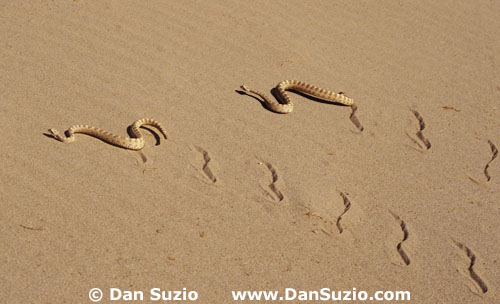
On the way back to my car I saw the tracks of a sidewinder crossing on top of the human footprints. That made it even better.

 Part 2: I finally make it to the celebration.

Tuesday, August 21, 2012

Can we still experience wilderness?


A recent op-ed in the New York Times described the proliferation of PLBs – personal locator beacons that send a distress signal along with GPS coordinates so the user can be rescued – and how they have led to an increasing number of unnecessary "rescues." Some of the examples were stunning: in 2009, a group of backpackers in Grand Canyon National Park used their PLB three times in four days. Each time they were met by a rescue team in a helicopter.

At Half Dome, hikers routinely ignore warning signs and/or storm clouds, then use their cell phones to call for help when they find themselves atop a slick granite dome in a lightning storm – and are shocked to learn that helicopters can't fly in that weather.

My first response to the article was that people who abuse PLBs, or otherwise waste the time and money of emergency services, should be billed for the cost of those services – or prosecuted for calling in a false alarm. But the more I think about how that would work in real life, the more complicated it becomes. For those of us who have spent our lives hiking and backpacking, it's easy to say some people are just too stupid to venture off the sidewalk – but of course that won't stop them.

I'm really curious about those guys at Grand Canyon. Had they never backpacked before? Did they not understand the concept of wilderness, the purpose of a PLB, or the definition of an emergency? Were they prone to panic attacks? Did they grow up in extremely wealthy families where calling for a helicopter – and then changing your mind about needing it – was considered normal?

But the Grand Canyon guys are outliers, or at least I hope they are. What about the cases that aren't so clear-cut? Who gets to decide what's a real emergency? When someone calls 911 and says, "I'm having a heart attack," the paramedics respond immediately. If, after a bunch of tests at the ER, the doctor says it was only indigestion or a panic attack, does that mean the 911 call was unnecessary? What kinds of mistakes are forgivable, and which ones should be punished?

I've been hiking since I could walk, and I know how to take care of myself on the trail. But I can think of plenty of times when I've made careless mistakes that could have ended in tragedy.

Twenty years ago at Point Reyes, I climbed down a steep cliff to photograph harbor seals on the rocks below. Halfway back up, I got stuck. Each time I moved a hand or a foot, I felt myself slipping as the cliff started to crumble out from under me. How long did I stay in that position? Five minutes? Half an hour? I really don't know. Eventually, somehow, I found my footing and was able to continue. If I'd had a PLB, or even a cell phone – if they had existed then – at what point would I have used it?

One afternoon in Lundy Canyon I parked at the trailhead and took what I intended to be a short walk, a look around to see if I wanted to take a longer hike the next morning. Before I knew it, I was a couple miles up the mountain, with no water or food, not even a long-sleeved shirt – and I could see storm clouds gathering. I headed back to the car. If I had twisted an ankle, or been struck by lightning, I could have been in serious trouble to say the least.

Last year I hiked to Thimble Peak, in the Grapevine Mountains, for the first time. It was a perfect day for hiking – temperature in the low 70s, a light breeze, blue sky, puffy white clouds, a view of Death Valley that goes on forever – one of those glorious desert spring days when nothing could possibly go wrong. And, in fact, nothing did. But as I was scrambling over loose shale, up the last couple hundred feet to the peak, I did have a few thoughts about the consequences of a careless mistake. How long would I have lain at the bottom of that canyon before someone discovered my body?

If any of those situations had turned out differently, I can easily imagine what people would have said about me. How could such an experienced hiker do something so stupid?

Well, the truth is we do it all the time.

Raise your hand if you read Into the Wild and thought, "That could have been me."

A recent blog post by Jill Homer sums it up: as we gain experience with potentially dangerous situations, we become more confident. As we become more confident, we take more chances. Nothing bad happened last time, so everything should be fine this time. If we want to continue to enjoy the wilderness, and survive for our next adventure, we need to be vigilant against overconfidence and the carelessness it produces.

Back to the question of all those electronic gadgets that keep us connected 24/7. What really bothers me is not that they get abused, but that they have led to a generational shift in the definition of wilderness, and how we relate to it. Inappropriate use of PLBs, 911 calls from Half Dome, or just checking email on the trail – they're all part of a world in which we're never really alone.

Hiking has always been a kind of meditation for me. I seek out wild places because of the isolation, the solitude, the distance from the everyday stresses of modern life. I know a lot of people share my perspective, while for others the wilderness is a place to test their limits, whether by climbing, kayaking, or simply surviving in a difficult situation.

Can you really experience that sense of isolation or challenge when you know you're carrying a device that will instantly put you in touch with a rescue team, standing by with a helicopter and all the medical supplies you might need? Or, for that matter, a device that puts you in touch with your boss, your family, and a Nigerian prince who wants to give you $43 million?

John Muir wrote, "Only by going alone in silence, without baggage, can one truly get into the heart of the wilderness."

 Is that journey even possible anymore?

Wednesday, June 20, 2012

Telescope Peak


From Badwater or Furnace Creek, look to the west at dawn and notice which peak begins to glow with the first hint of sunrise. From Panamint Valley, look to the east at sunset and watch the same mountain hold the last trace of the day's light. Standing at Dante's View, look down toward Badwater, a mile below the cliffs. Now look up slowly, scanning across the valley, past the salt flats, then the enormous alluvial fans at the mouth of Hanaupah Canyon, and up the mountains to the highest peak in the Panamint Range. You're looking at Telescope Peak, more than a mile above you – more than two miles higher than Badwater.

At 11,049 feet, Telescope Peak is the highest point in Death Valley National Park, and is visible from almost anywhere in the southern half of Death Valley. After a few days in the park, it might start to feel like an old friend. But if you really want to get to know this mountain, you need to hike the Telescope Peak Trail.

The trail can be challenging, but it's always worth the effort, combining the exhilaration of mountain hiking with the wide-open spaces of the desert. In practical terms, it may be the only place in the park where you can find comfortable hiking weather in summer or early fall. (It's also the place where the meniscus in my left knee finally wore out, leading to surgery and several months of physical therapy.) Wildflowers bloom here in July, months after they've disappeared from the valley floor. But it's the views that keep people coming back.

From its origin at Mahogany Flat, the trail leads you out of the piñon-juniper forest, past twisted and gnarled bristlecones and limber pines, and over windswept rockscapes where the shrubs and cacti huddle close to the ground, the only way they can survive. In early spring, the snow-capped peak stands in stark contrast to the arid valleys below. As the snow melts, it supports wildflowers and even some amphibian populations in the surrounding canyons.

With views of Death Valley to the east and Panamint Valley to the west, you can get a visceral understanding of basin-and-range geology, with its deep valleys separated by steep mountains. You can also see very clearly the role of water in that geology, as you look down on what are obviously two huge dry lakebeds.

Mostly, though, you'll just feel overwhelmed by the size and scale of the desert. 

Wednesday, June 13, 2012

The Salt Tramway


The first time I saw these three wooden towers – between Saline Valley Road and Salt Lake, at the south end of Saline Valley – I was confused. They're obviously made to support a lot of weight, far more than would be needed for phone or electric lines. Looking the other direction, I saw a couple more towers on the mountainside, and something that might have been the entrance to an old mine.  Oh, of course, I thought, the towers were part of a tramway to bring ore down from the mine. But that didn't quite make sense – why would the tramway extend all the way to the lake?

The real explanation was something I couldn't even imagine. The towers did hold cables for a tramway, but it wasn't for bringing ore down the mountain – it was a system for delivering salt from the evaporation ponds at the edge of the lake. Built in 1912 to 1913, it was the steepest tramway in the United States, climbing to the 8,740 foot crest of the Inyo Mountains and down the other side to a railroad terminal near Owens Lake, a distance of 13.5 miles. For a while, in 1914 or 1915, it also was used to transport copper ore from the nearby Blue Jay Mine. But salt was the main attraction in Saline Valley, and the tramway was (and still is) known simply as the Salt Tramway.

Construction of the Salt Tramway was one of the most ambitious projects ever attempted in the Death Valley area. Parts of the route are so steep that a temporary tramway had to be built to deliver lumber, food, water, and other supplies needed for construction. (Don't ask me how they delivered the supplies to build the temporary tramway.) The tramway's 286 buckets, moving at a speed of about one per minute, delivered their first load of salt in July 1913, but there were still a lot of mechanical problems to be worked out. Two years of tinkering were needed before it could operate at full capacity.

And, like a lot of ambitious projects of the time, it never made a profit. In 1920 the whole system was repossessed by the company that had financed it, and the salt ponds were abandoned. 

In 1928 the Salt Tramway started up again, and was used for five more years – until falling prices during the Great Depression made it unprofitable once again. It shut down for the last time in 1933. Some of the cables and equipment were salvaged for use in other mining operations, but most of the towers, control stations, and other structures are still there.

Tuesday, June 5, 2012

Shooting the breeze


Like all photographers, I love sand dunes. Their subtle shadings and sensuous curves make them a classic subject in nature photography. I'm especially intrigued by their endless patterns within patterns, revealing new and surprising compositions on every scale, from wide-angle to macro.

Like all camera owners, I hate sand dunes. Their two basic ingredients – sand and wind – are a deadly combination for photographic equipment. Desert sand can be extremely fine, and can penetrate even the most tightly sealed lens.

Maybe that explains why the overwhelming majority of sand dune photos depict peaceful scenes of a serene and silent desert. Those scenes are beautiful, I agree, but do they really show what a sand dune is? Is it even possible to make a photo that shows the beauty and serenity of the dunes and the dynamic, often violent winds that create them? How do you photograph wind, anyway?

Late one afternoon last spring, I headed out onto the dunes in Saline Valley, hoping once again to capture that beauty and movement in a single photo. I started my walk in a light breeze, but within ten minutes it felt like a hurricane. The wind was like sandpaper on my face. I could barely open my eyes to see where I was going, and at times I had trouble keeping my balance. Photography seemed out of the question, but I really wanted the shot. I allowed myself a half hour and then headed back to the car, where I spent the rest of the evening cleaning my camera.